-
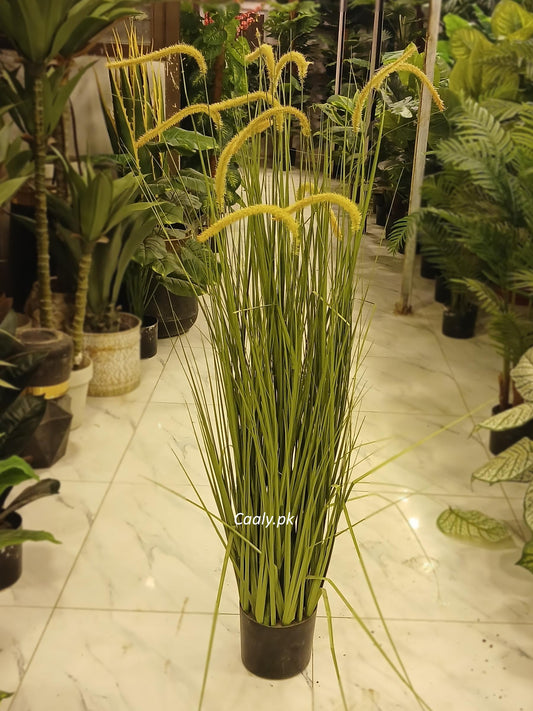
Artificial Foxtail Grass Plant
Regular price Rs.10,000.00 PKRRegular price

Why Choose Artificial Creepers?
A single plant usually creates one focal point. A creeper is built for something bigger than that.
It can run along a railing, wrap around a pergola post, drape across a shelf edge, or soften an entire wall that feels too plain on its own. Restaurants, cafés, event spaces, and retail environments often reach for creepers specifically because they suggest abundant, established greenery — the kind that would take a real vine years to grow — without needing a dozen separate plants to get there.
Coverage Over a Single Statement
The appeal of a creeper isn't really about any one plant looking good. It's about the cumulative effect once it's covering a length of railing or trailing along a wall.
That makes creepers a practical choice anywhere the goal is atmosphere rather than a single focal point — an outdoor seating area that needs to feel more established, a plain fence line, a stairwell that could use some softening from top to bottom.
Where Creepers Do Their Best Work
Creepers are most effective anywhere there's a structure to follow — a railing, a trellis, a pergola beam, a shelf edge, a fence line. They're less suited to standing alone the way a hanging plant or floor plant is, since their whole design logic assumes something for them to trail along or wrap around.
Restaurants and cafés often run them along outdoor seating dividers or pergola beams. Homes use them on balcony railings or garden fences. Retail stores sometimes drape them along shelving to soften an otherwise plain display.
Indoors or Outdoors
Creepers hold up well in both settings, though outdoor placement is where they're used most — pergolas, balcony rails, garden walls, and fence lines all benefit from the coverage a creeper provides in a way a single potted plant can't match.
Indoors, they're often used along shelving, stair railings, or room dividers where a continuous line of greenery reads better than an isolated plant.
Getting the Unevenness Right
A real climbing vine never grows in a perfectly even sheet — some sections are denser, some thinner, and the leaves twist and overlap unpredictably as it spreads.
A convincing creeper mimics that irregularity rather than repeating an identical leaf pattern down its full length. It's usually the giveaway between a creeper that looks like it's been growing there for years and one that reads instantly as a product — not the leaf shape itself, but whether the coverage looks grown-in or manufactured.
Who Buys Artificial Creepers?
Homeowners use them along balcony railings, garden fences, and pergolas where they want a more established, greener look without waiting years for a real vine to take hold. Restaurants and cafés use them to soften outdoor seating areas and create atmosphere along railings or dividers. Retail stores and event spaces use them to dress shelving, backdrops, or partitions that need to feel more finished.
The goal usually isn't a single plant anyone notices. It's a space that feels more grown-in than it actually is.